Treasures of Turkey
Delve into the rich culture and history of Turkiye on an intoxicating journey across this incredible land.
- Return flights
- 11 nights in 4-star hotels and 23 meals
- 23 meals: 11 breakfasts, 2 lunches and 10 dinners
Delve into the rich culture and history of Turkiye on an intoxicating journey across this incredible land.
A chance to explore breathtaking sights in three fascinating South American countries.
Located in north-east Italy, Venice is a floating maze of canals, bridges and sunlit stone built across more than 100 islands.
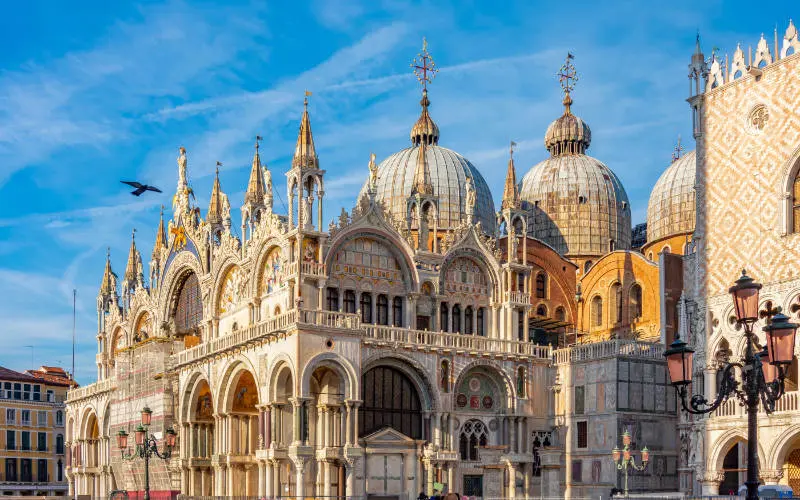
Key sights include St Mark’s Square, St Mark’s Basilica, the Doge’s Palace, the Rialto Bridge, and Scala Contarini del Bovolo.
In your free time, add Santa Maria della Salute, views from the Campanile, or a visit to Teatro La Fenice.
Food and drink are part of the pleasure, from classic Venetian flavours to a relaxed dinner and Prosecco in Treviso.
Travelsphere’s Grand Tour of Italy and A Taste of Italy's Veneto tour pair expert guiding and smooth logistics with time to explore on your own.
Venice rarely needs an introduction, because you’ve probably seen it so many times in films and photographs. It’s the city of masked balls and candlelit palazzos, of film scenes set on moonlit canals, of Vivaldi echoes and church bells carrying across the water. But seeing it in real life is something else entirely.
The first time you watch a vaporetto nudge up to a stop like a floating bus, or walk over a bridge and find the Grand Canal opening up before you, you understand what makes Venice so special. This isn’t a normal city with a few canals running through it. Here, the water shapes everything, from how you get around, what you see, to the whole pace of the place.
Venice sits at the north-eastern edge of Italy, where the mainland gives way to the shallows of the Venetian Lagoon. It’s a city shaped as much by water as by stone, with more than one hundred small islands stitched together by bridges over narrow canals and walkways.
For centuries, the lagoon was Venice’s protection and its route to the world. The city grew powerful through trade, shipping and diplomacy, and for centuries the Venetian Republic shaped the politics, art and commerce of the Mediterranean. That long history is written everywhere: in the Byzantine mosaics of St Mark’s Basilica and the Gothic flourishes of the palazzi (palaces) that line the canals.
If you’re keen to know about the best things to do in Venice, read on. On Travelsphere’s Grand Tour of Italy, you can enjoy the highlights of this beautiful city with the help of your Holiday Director and expert Local Guides. You’ll also have a chance to explore the city in your free time, so you can take in some of the lesser-known sights and enjoy local specialities.
Discover more about the key attractions to visit in the ‘Floating City’ as well as experiences that offer a window into Venetian life.
To understand Venice’s historic importance, begin in St Mark’s Square. This is the city’s ceremonial heart: a wide, open space framed by elegant arcades and landmark buildings that have witnessed everything from state processions to modern-day carnival crowds.
Wherever you stand, it’s easy to take in the square’s main layers at once. Along the sides are the arcaded Procuratie buildings, with cafés tucked beneath their arches. Facing you is the richly decorated façade of St Mark’s Basilica, and the strong vertical line of the nearby Campanile.
Take a moment to look upwards. You’ll spot carved stonework and shimmering mosaics on the basilica’s exterior, along with the ornate arches and windows of the surrounding buildings.
St Mark’s Basilica has an unmistakable atmosphere you don’t really find anywhere else. The light is softer than you might expect, and the golden mosaics create a sense of depth and warmth. Architecturally, it doesn’t feel like a typical Italian cathedral, but instead carries detailed traces of Venice’s centuries of contact with the East.
The building itself was designed to showcase Venice’s confidence and openness to new ideas, and it’s a place where art, religion, and politics have always been closely intertwined.
This historic building is a treasure trove of details, from the intricate flooring to the gilded ceiling frescoes that look like illuminated manuscripts.
If St Mark’s Basilica shows Venice’s spiritual and artistic ambition, the Doge’s Palace represents how the city was run and governed.
For hundreds of years, from the 1300s until the late 1700s, this was where decisions were made, justice administered, and the city’s interests defended. The palace itself is a reminder that Venice liked power to look elegant.
The exterior is ornate and surprisingly delicate for a seat of government, while the scale and decoration of the interior show that the republic understood image as a form of influence.
If you have time to explore and would like a broader view of Venice, the Campanile is one of the city’s best-known lookouts. From above, this piercing landmark offers views of the lagoon and the rooftops, giving you a stronger sense of the city’s layout and its relationship with the sea beyond.
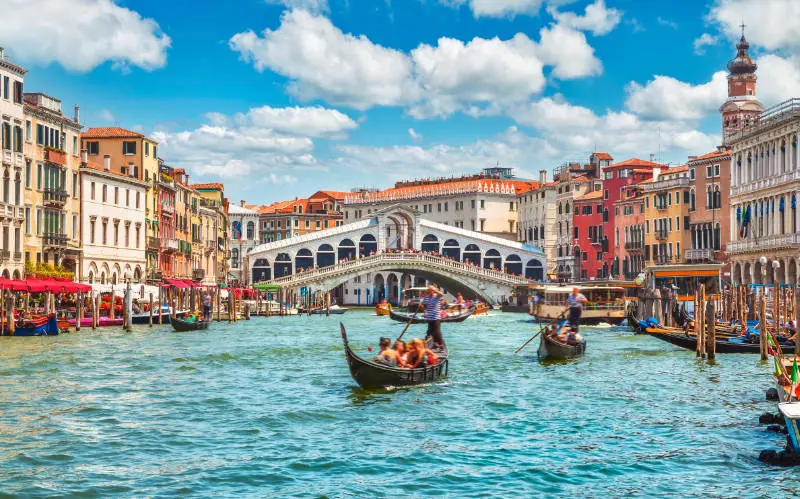
The Rialto Bridge is one of Venice’s most recognisable landmarks, but it’s more than just a photo stop. Spanning the Grand Canal at one of the most important points in the city, the bridge and the surrounding area have been a hub of commerce for centuries.
Today, the bridge remains a busy marketplace, thanks to the rows of small shops selling jewellery and souvenirs lining both sides of the central walkway.
As you cross, pause in the middle and look along the waterway. You’ll see boats slip past, palazzi lined up like theatre scenery, and the canal stretching away in both directions. It’s a simple pleasure, but a distinctly Venetian one with water as movement, architecture as a backdrop and everyday life as the performance.
From this bustling bridge, you can wander into quieter streets or make your way towards markets and small squares that feel a step removed from the main tourist routes.
Venice is famously flat, but the elegant spiral staircase of Scala Contarini del Bovolo offers a different perspective. From the top, you can see terracotta rooftops, sloping church domes, and the compact geometry of Venice’s streets and canals.
There are around 80 steps to the top, but the climb itself is part of the experience, and the rewarding view reveals this incredible city as a living maze.
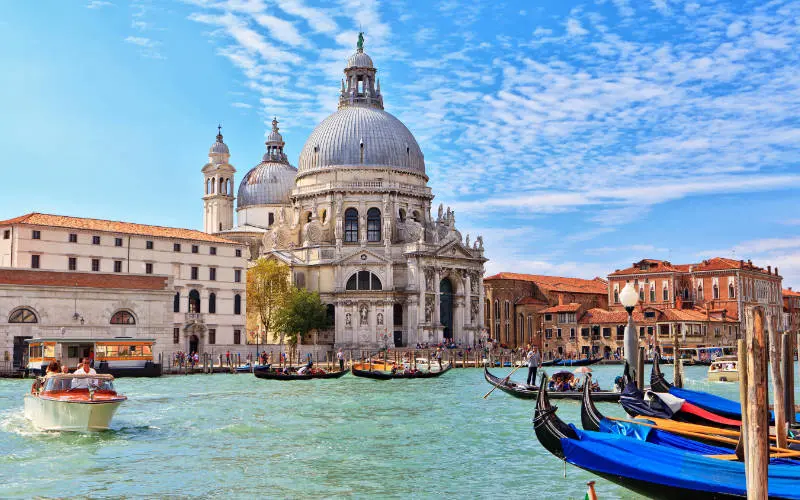
The great pale dome of Santa Maria della Salute is one of Venice’s most recognisable silhouettes. If you have free time, it’s well worth visiting this striking church on the Grand Canal, directly opposite St Mark’s. Seeing it up close adds a calmer, more reflective note to your day, and many visitors find it a welcome contrast to the crowds around the Piazza.
If you choose to go inside, it’s useful to have something with you to cover bare shoulders.
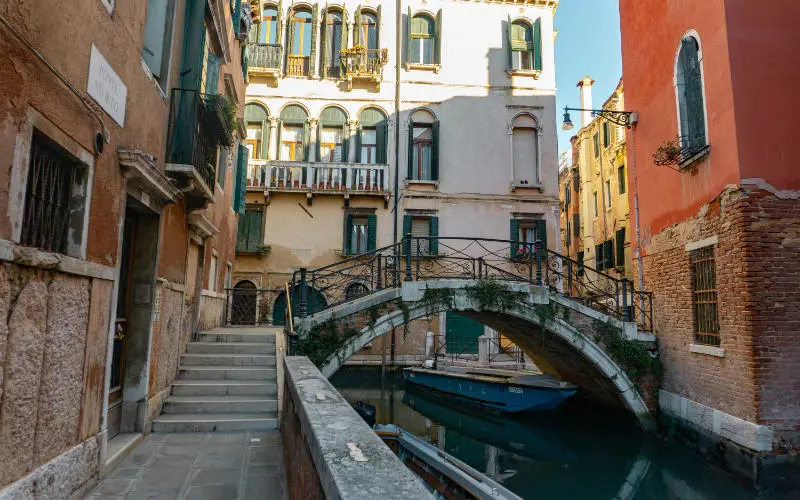
One of the most satisfying things to do in Venice doesn’t involve a ticket. Taking your time as you wander the narrow passageways and cross the many small bridges allows you to observe the city’s residents as they go about their daily lives.
You might pass a bakery with trays cooling in the window, catch the sound of water against stone from a quieter canal or discover a quiet neighbourhood campi (small square).
You could also come across unusual shops such as Libreria Acqua Alta, where books are stacked in gondolas and bathtubs, or unexpected pieces of street art. Venice is home to Banksy’s ‘Migrant Child’, which is expected to return to Palazzo San Pantalon following restoration work.
Venice is a compact city, so walks like these are less about the distance and more about the details; don’t be afraid to take the occasional turn that looks interesting.
Teatro La Fenice (‘the Phoenix’) is one of Italy’s most famous opera houses. First opened in 1792, it has been destroyed by fire and rebuilt several times, living up to its mythical name.
Even if you’re not an opera devotee, there’s something enjoyable about stepping into a place designed for drama and spectacle, then returning to the quiet of the streets outside. If you have a chance to visit, pay close attention to the gilded details on its swooping balconies and heavenly frescoed ceiling.
Discover the best time to visit Italy.
Venice is backed by fertile plains and, as a central hub between Europe, the Middle East, and Asia, has historically been connected to trade routes that brought spices (such as cinnamon, pepper, and cloves) and new techniques into its kitchens. That combination has helped to shape the way the city eats, with seafood and seasonal produce sitting alongside dishes that feel distinctly Venetian.
Away from the busiest streets, you’ll also find small, characterful eateries tucked into quieter corners, where locals stop for a simple plate of food and a drink.
Here are a few flavours and food experiences to look out for:
Cicchetti (Venetian small plates) – These tapas-like dishes are a good way to get a taste of Venetian life. Drop into a bàcaro (a traditional wine bar) and choose a couple of cicchetti at the counter. Try fried cheese in breadcrumbs, flavourful salt cod, polpette (meatballs) in vegetable sauces, and fresh sardines with sweet-and-sour onions.
Seafood – Fresh and unfussy, classic Venetian seafood dishes to try include spaghetti alle vongole (with clams), seppie al nero (cuttlefish cooked in its ink), and grilled fish with olive oil, lemon and herbs.
Risotto – A familiar sight on Venetian menus, risotto dishes change with the seasons. You’ll come across seafood-leaning versions or vegetable-led plates built around flavourful stock, butter, onion, and cheese.
Vegetables – It can be hard to grow vegetables on the water, but Venice is a city with one foot still on the land. Artichokes are particularly delicious in the lagoon islands when in season, as are beans, onions, and fresh herbs like mint and wild thyme.
Sweet treats – Any dessert lover should try Venetian classics, including crostoli (fried dough dusted with powdered sugar) and fritelle (fried dough balls filled with raisins, chocolate, or cream). You’ll also spot shops selling colourful displays of cannoli in flavours ranging from pistachio to chocolate.
Spritz Veneziano – This delicious drink is similar to an Aperol Spritz, but lighter, less sweet, and garnished with a green olive.
On Travelsphere’s Grand Tour of Italy, the tour’s full day in Venice will end with the onward journey towards Treviso, a picturesque town of cobbled streets and medieval walls, where you’ll have free time to enjoy a dinner and try some local dishes. Treviso also offers unique, more rustic specialities, and is proud of its claim to tiramisù.
Discover the 35 Italian Foods You Absolutely Need to Try.
Venice is hugely rewarding, but it can also feel daunting if you’re worried about crowds, logistics, or simply making the most of limited time. That’s where Travelsphere’s approach comes into its own.
On a Travelsphere escorted tour, you’ll be supported by a knowledgeable Holiday Director and specialist local guides, so you’re not piecing together history and logistics on the fly.
The itinerary includes organised transport (including boat travel into Venice), overseas transfers, and porterage, which can make a real difference when you want to focus on the experience rather than the admin.
You’ll see Venice’s key sights and still have free time to explore in your own way, whether that’s a quieter church, a view from the Campanile, an opera-house visit, or a gondola ride.
If Venice is calling you, Travelsphere’s Grand Tour of Italy is an inviting way to experience it as part of a wider Italian journey, with expert support and a thoughtful balance of guided discovery and personal time.
Alternatively, explore our selection of Italy escorted tours.

Part of the Royal Geographical Society collection, travel from top to toe and explore Italy’s famous landmarks. Visit iconic cities Venice, Florence and Rome and discover the hidden gems of Pompeii, Sicily and more.