Galapagos Animal Magic - What to spot on a tour to the islands

Quick read…

  • See giant tortoises roaming freely at a ranch in the Santa Cruz highlands and learn about their conservation at Isabela’s breeding centre.

  • Watch for blue-footed boobies and frigatebirds on a cruise along the San Cristóbal coast.

  • Look for Galápagos penguins from a small boat in Isabela’s bay and marine iguanas on the lava rocks at Tintoreras.

  • Keep an eye out for sea turtles while snorkelling at Kicker Rock and sea lions in the sheltered waters off Isabela.

  • Explore Santa Cruz, Isabela and San Cristóbal with a specialist local guide on Travelsphere’s 14-day Galapagos Island Hopping tour.

The Galápagos Islands are arguably the world’s ultimate wildlife-watching destination, and a trip to this amazing archipelago is likely to be one of the most amazing adventures you ever have. From coastal walks to snorkelling trips, here’s where to look for some of the islands’ best-known wildlife and how to recognise it when you see it.

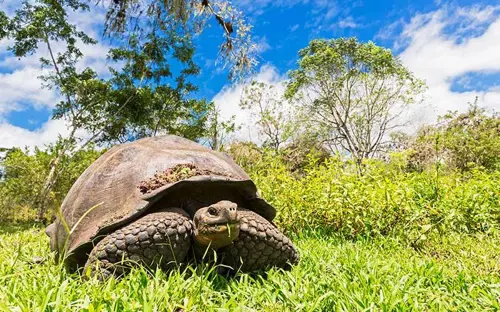
Galápagos Giant Tortoise

The giant tortoise is perhaps the most famous resident of the islands, and the largest can reach nearly two metres in length. On Santa Cruz, we visit a private ranch in the highlands where the tortoises roam freely. At Isabela’s Giant Tortoise Breeding Centre, you can see tortoises at different stages of growth and learn how young animals are raised for release into the wild.

Back on Santa Cruz, the visit to the Charles Darwin Research Station tells the story of Lonesome George. The last known Pinta Island tortoise, he died in 2012 and is now on display.

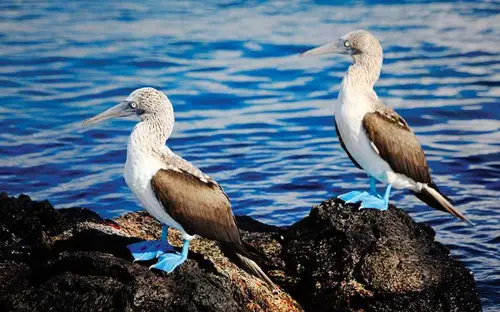
Blue-footed Booby

Three types of booby are found on Galápagos, but with their large, brightly coloured feet, the blue-footed species is one of the easiest to spot. Males show them off in a high-stepping courtship dance. On our coastal cruise off San Cristóbal, watch for boobies fishing. They fold their wings back and plunge headfirst into the sea after small fish.

Galápagos Penguin

One of the world’s smallest penguins lives near the Equator, where cool ocean currents bring the nutrients that support the fish it feeds on. Our small-boat trip to Tintoreras, off Isabela, offers the best chance of spotting one on the tour. Scan the low lava ledges as the boat follows the coast, and watch for movement in the water just offshore.

Magnificent Frigatebird

With their huge wingspan, the magnificent frigatebird can spend days at a time on the wing. The males have distinctive large red throats, whilst females are larger with a blue eye-ring. It is thought there could be several thousand pairs on Galápagos, and they are frequently spotted by visitors.

Galápagos Green Turtle

Don a snorkel, dive into the water and keep your eyes peeled for the Galápagos green turtle. This is the only species of turtle known to breed and nest in the islands and during the mating season, females will crawl onto the beaches at night to lay their eggs.

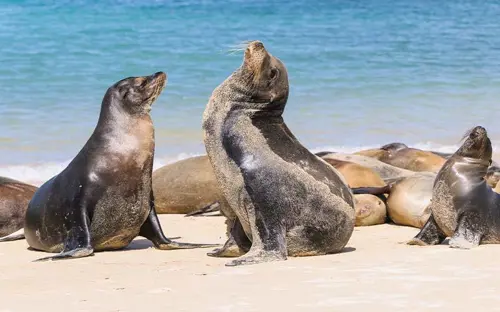
Galápagos Sea Lion

Found in abundant numbers along the coastline of the islands, you might be lucky enough to see Galápagos sea lions swimming close to the shore or basking on beaches and rocks. On land, look for their small external ears and watch how they turn their hind flippers forwards to move across the beach. You may also see them while snorkelling in the sheltered waters at Tintoreras, or spot a pup on the snorkelling stop off San Cristóbal.

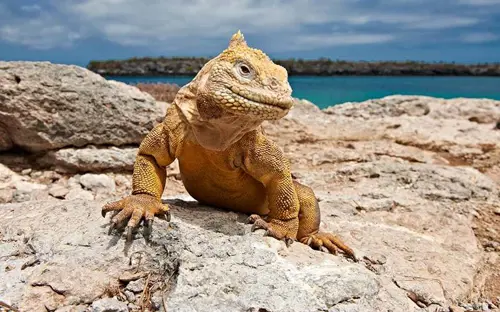
Galápagos Land Iguana

Found only on Galápagos, these yellow lizards grow to about a metre in length. They can be spotted all year round on several islands, including Isabela and Santa Cruz.

Galápagos marine iguana

On the short walk across Tintoreras Islet, scan the dark lava rocks for marine iguanas basking in the sun. Found only in the Galápagos, they’re the world’s only lizards that feed in the sea, where they graze on algae. If you notice a dusting of white on an iguana’s snout, it may be salt left behind after the animal sneezes out the excess.

Let us take you there...

  1. Galapagos Island Hopping

    The holiday of a lifetime for nature lovers. Explore Ecuador's cloud forest and stay on three of the Galapagos Islands.

    • Return flights
    • 12 nights in great quality hotels, 1 night in flight
    • 26 meals: 11 breakfasts, 10 lunches and 5 dinners

    Includes Galapagos Park Fee $200 (£151)
    Includes Isabela Island Port Fee $10 (£8)
    14 days from
    £5,498
    was £6,448