Greece, with its ancient history, stunning landscapes, and vibrant culture, is a top destination for travellers worldwide. But when is the best time to visit Greece?
In this guide, we’ll explore the optimal times to visit, considering weather, crowds, and must-see destinations, to help you plan a memorable trip to this eastern Mediterranean gem.
Let’s dive in
So, when is the best time to visit Greece?
For most travellers, the best time to visit Greece is typically late spring or early autumn (April to June and September to October), when you’ll get warm, sunny days without the peak-season crowds.
If you’re a fan of hot weather and want to bask in the sun, the summer months of June to August would be more suitable. On the other hand, if you prefer milder temperatures and fewer tourists, consider visiting in the shoulder seasons of spring (March to May) or autumn (September to November). These seasons offer comfortable weather for sightseeing and outdoor activities without the intense heat and crowds of summer.
No matter when you choose to visit, Greece has something to offer every traveller. From the ancient wonders of Athens to the stunning beaches of the Greek Islands, there’s no shortage of memorable moments. Experience the best of Greece with our Greece guided tours, designed to help you make the most of your visit to this beautiful country.
The best season to visit Greece
Spring in Greece

Spring in Greece is a delightful time to visit, with the landscape blooming and temperatures warming up. Discover the wildflowers of Crete as you join fellow travellers on nature walks across this idyllic Greek island. March marks the beginning of spring, with cooler temperatures gradually giving way to warmer days by May.
This season is ideal for exploring archaeological sites such as the Acropolis, Delphi and Knossos, as well as enjoying outdoor activities. The Greek islands are also beautiful during spring, with fewer crowds and pleasant weather for beach outings.
Spring weather can vary by region. Athens tends to warm up quickly, making it comfortable for exploring the city and visiting ancient sites. In the Cyclades (including Santorini), spring days can feel bright and breezy, with a fresher coastal feel. Crete is often one of the warmest spots early in the season, and mainland Greece can still be cooler in higher or inland areas, especially earlier in spring.
Here are some top tips for what to do in Greece in spring:
Explore the ancient ruins of Athens and Delphi before the summer crowds arrive.
Visit the picturesque villages of Santorini and Mykonos without the peak season crowds.
Take a moment to explore the abundance of wildflowers, natural fauna and botanical landscapes.
| March | April | May |
Athens (Central) | | | |
Avg. temperature °C | 13 | 16 | 21 |
Avg temperature °F | 55 | 61 | 70 |
| | | |
Crete (South) | | | |
Avg temperature °C | 14 | 17 | 21 |
Avg. temperature °F | 57 | 63 | 70 |
| | | |
| | | |
Summer In Greece

Summer in Greece is a splendid season, with warm temperatures and sunny days creating the perfect setting for sun worshippers.
The summer months of June, July, and August are characterised by long, sunny days and clear skies, making it an ideal time for beach lovers and sun seekers. Whether you're looking for relaxation or adventure, Greece has something for everyone in the summer months.
In summer, the Cyclades often feel made for long, sunlit days, with sea breezes taking the edge off the heat in places like Santorini. Crete is reliably warm and well suited to beach time, while parts of mainland Greece can feel hotter inland than on the coast. The heat in Athens can be especially intense in July and August, so it’s usually more comfortable to sightsee early in the day and take long breaks in the shade as temperatures rise.
Here are some top tips for what to do in Greece in summer:
Enjoy the beaches: Greece offers a variety of beaches, from the famous ones in Mykonos and Santorini to hidden gems in the Peloponnese.
Explore the islands: Whether you seek a lively atmosphere in Mykonos, a romantic escape in Santorini, or a peaceful getaway in Crete, the Greek islands have it all.
Sample local cuisine: Greek food is renowned for its fresh, flavourful ingredients. Summer is the perfect time to enjoy traditional dishes like souvlaki, moussaka, and tzatziki, along with fresh seafood and local wines.
| June | July | August |
Athens (Central) | | | |
Avg. temperature °C | 27 | 31 | 31 |
Avg temperature °F | 81 | 88 | 88 |
| | | |
Crete (South) | | | |
Avg. temperature °C | 25 | 28 | 28 |
Avg. temperature °F | 77 | 82 | 82 |
Autumn in Greece
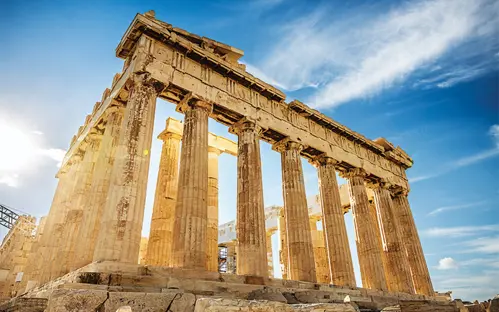
Autumn in Greece is a delightful season, with milder temperatures and fewer crowds, making it an ideal time to explore this beautiful country. As the summer heat begins to fade, the landscape transforms into a tapestry of golden hues, creating a picturesque backdrop for your travels.
As the season turns, Athens becomes far more comfortable for sightseeing, with the heat easing and the city’s ancient sites more enjoyable to explore at a steady pace. Mainland Greece is often ideal for cultural exploration and outdoor time in autumn, while the Cyclades can still enjoy warm days early on, with evenings cooling as the months progress. Crete often holds onto summer warmth longer than many other regions, making it a strong option if you want to escape home for a dose of sunshine.
Here are some top tips for what to do in Greece in autumn:
Explore the outdoors: With cooler temperatures, autumn is perfect for exploring Greece's natural landscapes. Hike through the Akrotiri Peninsula or stroll through Omalos Upland Plain.
Visit archaeological sites: Autumn is ideal for visiting ancient ruins like the Acropolis and Delphi, with fewer tourists.
Sample seasonal cuisine: Try Greek dishes like stifado and gemista, made with fresh autumn produce.
| September | October | November |
Athens (Central) | | | |
Avg. temperature °C | 26 | 21 | 16 |
Avg temperature °F | 79 | 70 | 61 |
| | | |
Crete (South) | | | |
Avg. temperature °C | 24 | 20 | 16 |
Avg. temperature °F | 75 | 68 | 61 |
Winter in Greece

Winter in Greece is a tranquil season, offering a different perspective on this historic land. While temperatures are cooler, Greece still enjoys a mild winter compared to much of Europe, making it an appealing destination for those seeking a winter getaway.
In winter, mainland Greece can feel noticeably colder inland in higher areas, while Athens is usually cool rather than freezing, with quieter streets and good conditions for museums and historic neighbourhoods on brighter days. The Cyclades and Santorini are windier and much quieter, with a distinctly off-season mood. Crete tends to stay milder than many other regions, though it can be wetter, so pack for changeable conditions if you plan to visit.
Here are some top tips for what to do in Greece in winter:
Explore historic sites: Winter is an ideal time to visit Greece's ancient sites, such as the Acropolis and Delphi, as you can explore them without the summer crowds.
Enjoy the festive season: Greece is known for its festive atmosphere during the holiday season. Experience traditional celebrations, decorations, and seasonal foods.
Relax in thermal springs: Greece is home to several thermal springs, where you can relax and rejuvenate in the healing waters.
| December | January | February |
Athens (Central) | | | |
Avg. temperature °C | 12 | 10 | 11 |
Avg temperature °F | 54 | 50 | 52 |
| | | |
Crete (South) | | | |
Avg. temperature °C | 15 | 13 | 13 |
Avg. temperature °F | 59 | 55 | 55 |
The best month to visit Greece
Greece in January
January is one of the coolest months in Greece, with average daytime temperatures of around 10-15°C in Athens and the south, and colder conditions in the north and higher ground.
The weather can feel changeable, with brighter winter days mixed with rain, so it’s best to approach it as a cultural, city-based trip rather than a beach holiday.
Crowds are low, making it a good month for quieter sightseeing, museum visits, and a more local feel in the main cities.
Greece in February
February remains cool, with average temperatures typically around 10-15°C in Athens and coastal areas, and colder inland and in northern regions.
You’ll often get crisp, clear days, although rain is still possible, and evenings can feel a trifle chilly. It’s still the off-season, so crowds are light, making it an enjoyable time to explore historic sites and neighbourhoods without the summer heat.
Greece in March
March is when the weather starts to feel as though it’s turning a corner, with average temperatures often around 12-17°C depending on the region.
Days can feel mild in the sun but cool in the shade, especially early in the month, and you may still see some rain. Crowds begin to pick up slowly towards the end of March, making it a good time for city exploration and early-season travel before prices and visitor numbers rise.
Greece in April
April is a popular shoulder-season month, with average daytime temperatures of roughly 15-20°C in many areas. The weather often feels pleasantly warm for sightseeing, with longer days and a fresher, greener landscape, although occasional showers are still possible.
Crowds are generally moderate rather than heavy, so it’s well-suited to combining cultural landmarks with time outdoors without the intensity of high summer.
Greece in May
May is one of the best months to visit Greece, with average temperatures typically around 20–25°C in many places and a reliably sunny feel.
It’s warm enough for long days out and, in some areas, the start of beach weather, while still being comfortable for walking and exploring archaeological sites.
Although crowd sizes are noticeably larger than early spring, they’re still below peak summer levels, so you get a lively atmosphere without the busiest conditions.
Greece in June
June is often the sweet spot if you want proper summer warmth without the full peak-season crush, with average temperatures commonly around 25-30°C.
The weather feels hot and bright, with long evenings that suit outdoor dining and coastal time, but it’s usually still comfortable for sightseeing earlier in the day. Particularly on the most popular islands, crowds will rise, but June still typically feels less hectic than July and August.
Greece in July
July is one of the hottest months in Greece, with average temperatures often around 30-35°C, and higher during heatwaves.
The weather feels intensely sunny and dry, with very warm evenings, which is perfect for beach time but can be tiring for midday sightseeing. Crowds are high across Athens and the islands, and it’s one of the priciest times to travel, so planning ahead helps.
Greece in August
August is similarly hot, with average temperatures around 30-35°C, and it can feel particularly intense in cities. The sea is warm, and the atmosphere is at its most summery, but popular areas are extremely busy, especially on well-known islands.
In August, crowds are at their peak, so it’s worth factoring in higher prices, fuller accommodation, and a more energetic, high-season pace when planning.
Greece in September
September is a favourite month for many travellers, with average temperatures often around 25–30°C and a settled, sunny feel.
It’s still warm enough for swimming and beach days, but the heat is usually more manageable for sightseeing than in mid-summer. Crowds begin to ease compared with July and August, particularly after the first half of the month, making it an excellent time for a balanced trip.
Greece in October
October brings milder warmth, with average temperatures typically around 20-25°C in many areas, though it cools more quickly in the evenings. The weather can still feel pleasantly sunny, but you’re more likely to see occasional rain as the month goes on.
Compared to the summer, crowds are smaller, making October an ideal time for cultural exploration, visiting wineries and a more relaxed pace, especially in cities and on larger islands.
Greece in November
November is cooler and more changeable, with average temperatures often around 15-20°C depending on the region. You may get clear, bright days, but rain is more common, and some island destinations feel much quieter as seasonal businesses close.
It’s a month well-suited to travellers who prioritise historic sightseeing and a calm, off-season feel, with much smaller crowds.
Greece in December
December is one of the quietest months to visit Greece, with average temperatures typically around 10–15°C in Athens and coastal areas, and colder conditions in northern and mountainous regions.
The weather can feel crisp and damp at times, but you’ll also get clear winter days that suit comfortable city exploring. Crowds are low, and it’s a good month for museums, historic neighbourhoods and a more local view of Greece without being overwhelmed by the summer rush. Explore the enchanting Christmas markets, taste traditional treats like loukoumades and melomakarona, and witness beautiful holiday decorations.
Explore our full range of Greece guided tours running throughout the year.
Best time to go to Greece for beaches, island hopping and sightseeing
Beaches and swimming
For beach days and swimming, late spring into early autumn is usually the most rewarding window, with June to September offering the warmest sea temperatures. If you’re combining coast time with touring, early summer and early autumn can be a comfortable balance, giving you sunshine for the beach without making inland sightseeing feel too hot or overwhelming.
Island hopping
If island hopping is the main goal, May, June and September are often the sweet spot, with warm, bright days and a more relaxed feel than peak summer. It’s a great time for routes that include the Aegean islands, with long days and fresh sea air that feels like part of the holiday.
Sightseeing and archaeology
For classic sightseeing that involves walking around outdoor archaeological sites, spring and autumn are usually best, particularly April, May, September, and October. This is ideal for big-ticket cultural landmarks on Travelsphere tours, from Athens and the Acropolis to ancient sites such as Delphi and Mycenae, where you’ll appreciate the milder temperatures and softer light.
For a full range of ancient sites, why not consider our Istanbul-to-Athens – Turkish Delights and Greek Treasures guided tour?
Fewer crowds
For a calmer experience with fewer visitors, aim for the shoulder seasons of April to early June or late September to October. At this time, the atmosphere is still lively, but popular places feel more spacious and less frantic. If you want the quietest months, winter is generally the least crowded, but some island areas can feel much sleepier outside the main travel season.
Insider tips for timing your visit
Here are a few tips for perfectly planning and timing your Greek adventures:
Think about the weather: Choose a season that aligns with your preferred weather. Summers in Greece are hot and bustling, perfect for beachgoers and sun-seekers. Spring and fall offer milder temperatures, ideal for sightseeing and outdoor activities.
Avoid peak season: If you prefer fewer crowds and more budget-friendly options, consider travelling in the shoulder seasons of spring and autumn. During these times, you’ll find that accommodations and attractions are more accessible and often more affordable.
Book key experiences early in summer: If you’re travelling in July or August, book popular activities and must-do visits ahead of time, as peak times can mean limited availability. Or book for the shoulder seasons for easier availability.
Research local insights: Consult travel forums or local recommendations to learn about regional climate variations in Greece. The weather can differ significantly between northern and southern Greece, so it’s essential to research your specific destination.
Nature and outdoor activities: If you enjoy walking or exploring national parks, opt for months with mild, pleasant weather. Spring and fall are excellent times for rambling and exploring Greece’s stunning natural landscapes.
City exploration: For city sightseeing and cultural experiences, consider visiting during milder months to comfortably roam historic streets and landmarks. Spring and fall offer ideal conditions for exploring Greece’s cities, with fewer crowds and pleasant temperatures.
Plan your days around the heat: In high summer, earlier starts and lighter afternoons let you fit more in without the risk of overheating or feeling overwhelmed. Save city walks and archaeological sites for the cooler parts of the day and long evenings outdoors instead.
When to go to Greece: Summary
The best time to visit Greece depends on your preferences and interests. If you prefer warm weather and lively beach scenes, July and August are ideal. However, if you want to avoid crowds and enjoy milder temperatures, consider visiting in the shoulder seasons of spring and autumn. These times offer pleasant weather for sightseeing and outdoor activities, with fewer tourists.
Explore our range of escorted tours and guided holidays to Greece to enhance your experience and make the most of your trip.



