What to Do in Florence? Top Sites to See

Reading time: 8 minutes
13th February 2026

Quick read…

  • Florence is a compact, walkable city on the river Arno, overflowing with Renaissance art, architecture, gardens, and centuries of history.

  • Must-see highlights include the Duomo complex, the Uffizi, Michelangelo’s David at the Accademia, the Ponte Vecchio, and the Boboli Gardens.

  • Taste the city with gelato and fresh pasta, and browse the city’s colourful markets for leather goods and crafts.

  • Escorted Tuscany tours add expert context and smooth logistics, helping you cover more highlights at a relaxed, well‑paced rhythm.

Compact and walkable on the Arno river, Florence feels like an open‑air museum, its streets layered with centuries of history. Domes, towers, and terracotta roofs rise above lively piazzas and medieval lanes. This is where the Renaissance began and flourished, with artists and architects experimenting with new ideas, backed by wealthy patrons such as the Medici family. Today, it remains an ‘art city,’ with its marble-faced cathedral and world-class museums, as well as quiet cloisters and peaceful gardens.

Where is Florence?

Florence (Firenze) is in the heart of Tuscany in central Italy, roughly halfway between Rome and Milan. The city sprawls along both banks of the Arno River, and is ringed by low hills and vineyards. It’s a must-visit destination on any Tuscany holiday.

For flights, Florence is served by both Pisa Airport (Galileo Galilei) and Florence Airport (Amerigo Vespucci). Travelsphere tours use Pisa, with its convenient road links into the city.

Knowing where the city of Florence sits geographically helps when planning a longer Tuscan itinerary – think vineyards in Chianti, medieval hill towns like Siena and San Gimignano, and the Tyrrhenian coast within day-trip reach.

If you’re planning a visit to Florence, this guide covers the big-name sights as well as calmer spots that can be enjoyed at a leisurely pace.

When you join our Treasures of Tuscany & Florence guided tour, you’ll explore Florence with a group of like-minded travellers. You’ll also have the support of a dedicated Holiday Director and expert Local Guides throughout.

Looking further afield than just what to do in Florence? Explore our collection of Italy tours, including our Puglia holidays and Italian lakes tours.

What To Do In Florence – 10 Memorable Attractions

1. Duomo Complex

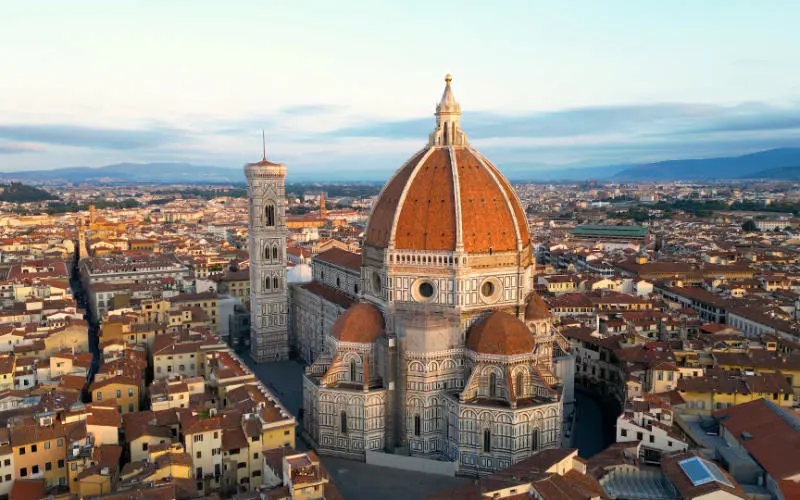
Piazza del Duomo is where you’ll find the city’s most iconic architecture – the Santa Maria del Fiore Cathedral, Brunelleschi’s Dome, Giotto’s Campanile, and the Baptistery.

No matter how many photos you’ve seen, that first glimpse of Florence’s grand cathedral is unforgettable. Its intricate green, white, and pink marble façade glows in the Tuscan sunlight. Inside, visitors and worshippers are treated to austere aesthetics that draw the eye upward towards the vast, red-tiled dome, painted with scenes of the Last Judgement.

Built between 1420 and 1436, Filippo Brunelleschi’s Dome is a masterpiece of Renaissance engineering – the largest dome ever constructed using bricks and mortar. You can climb to the top for a close look at the frescoes and a sweeping view over the city’s terracotta rooftops, or climb Giotto’s Campanile for an equally fine city view with the dome itself in frame.

Across the square, the octagonal Baptistery of San Giovanni shines with golden ceiling mosaics. Its famous bronze doors are exact replicas of the original ‘Gates of Paradise’ doors created by Lorenzo Ghiberti; the originals are safely kept in the Museo dell’Opera del Duomo. Ghiberti’s panels used perspective to create depth and lifelike figures, a breakthrough that helped shape Renaissance art.

Aerial view of Florence Cathedral or Duomo di Firenze, sunset golden hour, Italy

2. Uffizi Galleries

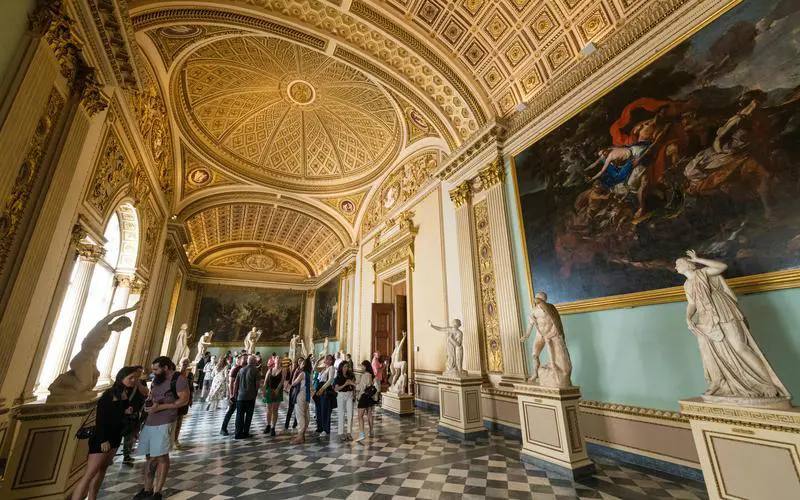
Florence is renowned for its art, and the world-class Uffizi Gallery is a highlight for many visitors. Room after room offers a crash course in Renaissance painting from Botticelli’s Primavera and Birth of Venus, Leonardo’s delicate Annunciation, to works by Raphael, Titian, and Caravaggio. The U-shaped building itself – once the offices of the ruling Medici family – frames the Arno, with statues of luminaries lining its courtyard.

Gallery of the Uffizi Museum, Florence, Italy.
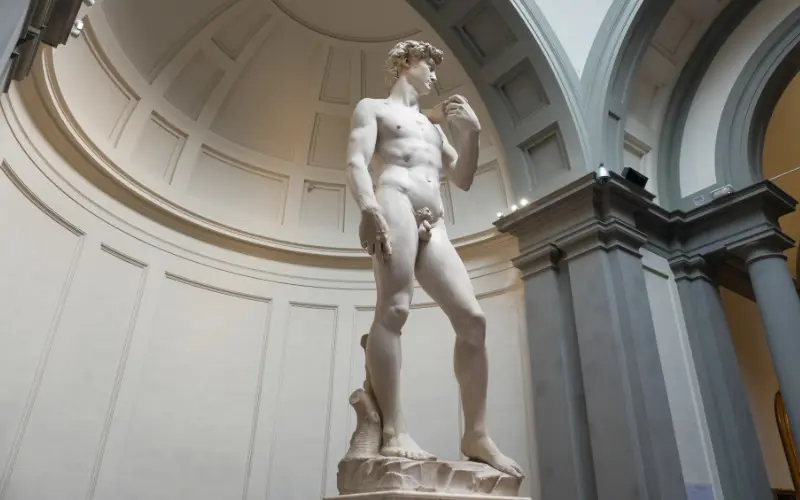
Michelangelo, David - Florence, Italy

3. Accademia Gallery

Where the Uffizi Gallery highlights Italian painting, the Academia Gallery is home to some of Italy’s finest sculptures.

Smaller than the Uffizi, the Accademia can be enjoyed in around an hour of free time. It is purposefully arranged so you walk down a bright corridor toward Michelangelo’s marble David, which stands under a domed skylight. Carved from a single block of Carrara marble between 1501 and 1504, David is over five metres tall and shows the moment before his fight with Goliath – alert, tense, and focused. The anatomy is precise, the pose is classical, and the scale is commanding. It became a symbol of Florence’s civic pride. The statue you see here is the original; a copy stands outside in Piazza della Signoria.

The gallery also showcases Michelangelo’s unfinished sculptures, known as the Prigioni. These are still partly made up of uncarved stone and offer an insight into his creative process.

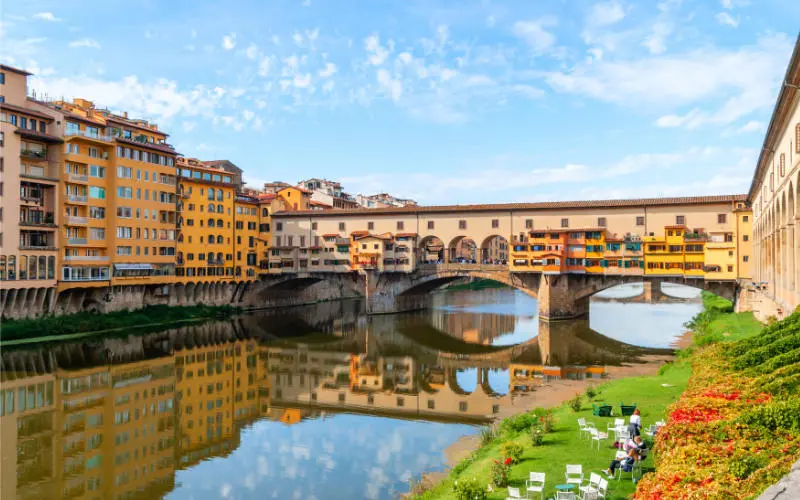
Beautiful view of bridge Ponte Vecchio, Florence, Italy

4. Ponte Vecchio and Arno River Views

The Ponte Vecchio is more than just a beautiful bridge – it has been a hub of trade and commerce since medieval times. Today, goldsmiths and artisans still sell detailed artworks and handcrafted accessories from the bridge’s historic shops.

Walk it for the atmosphere, then step back for the classic Arno River panorama – either from the neighbouring Ponte Santa Trinita or further west at Ponte alla Carraia. At sunset, the river turns coppery and the city lights flicker on, reflected in the water.

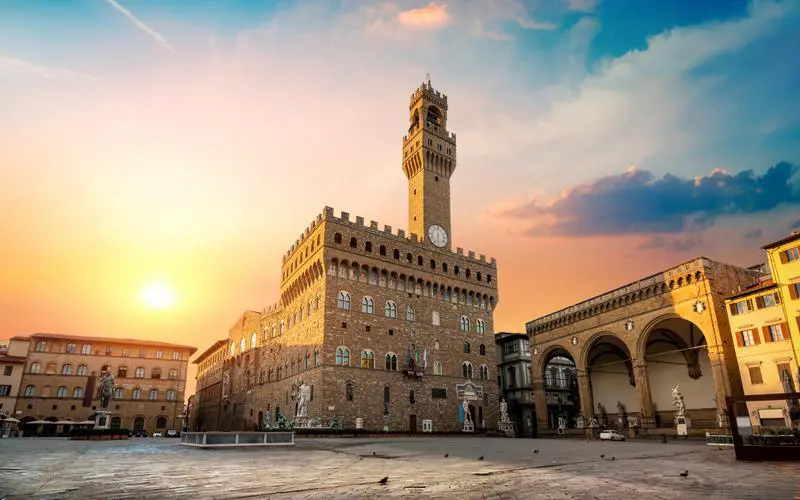
Square of Signoria in Florence at sunrise, Italy

5. Palazzo Vecchio and Piazza della Signoria

The Palazzo Vecchio, a magnificent Gothic-style fortress, has been the centre of Florentine government since the 14th century. Inside, you’ll find state rooms frescoed with epic scenes, secret staircases, and views from the Arnolfo Tower over the city’s rooftops. Leonardo da Vinci’s famous lost fresco is widely believed to be hidden behind a wall in the Hall of the Five Hundred (Salone dei Cinquecento).

Outside, the square itself feels like an open-air gallery, with significant artworks and sculptures, including the Fountain of Neptune, a replica of Michelangelo’s David, and the Loggia dei Lanzi.

Looking for more Italian heritage and culture? Our Grand Tour of Italy offers an incredible 15-day journey from Venice in the north to Sicily in the south.

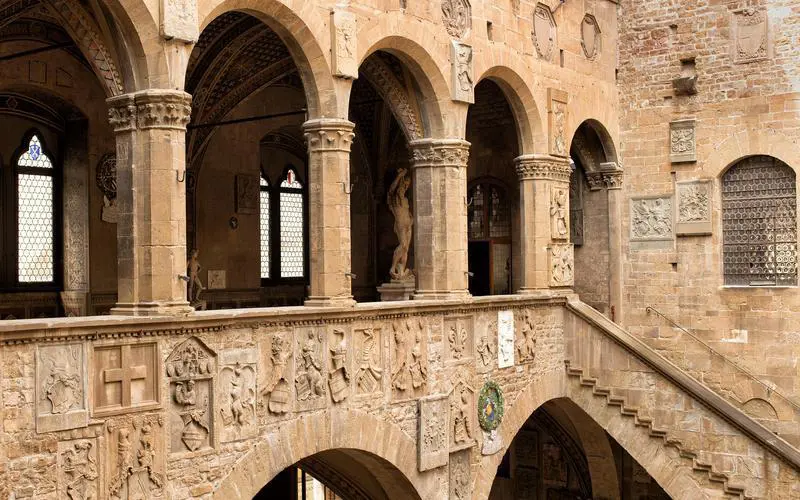
6. Museo del Bargello

Housed in a former barracks and prison, the Bargello is Italy’s finest Renaissance sculpture museum, housing works by Donatello, Verrocchio, and Michelangelo, among others.

Donatello’s bronze David – daring for its time – is the star here, but many visitors also appreciate the reliefs by Ghiberti and Brunelleschi. The museum has a tranquil atmosphere, which distinguishes it from larger galleries in Florence and appeals to visitors seeking a more serene experience.

National Museum of Bargello, Florence, Italy

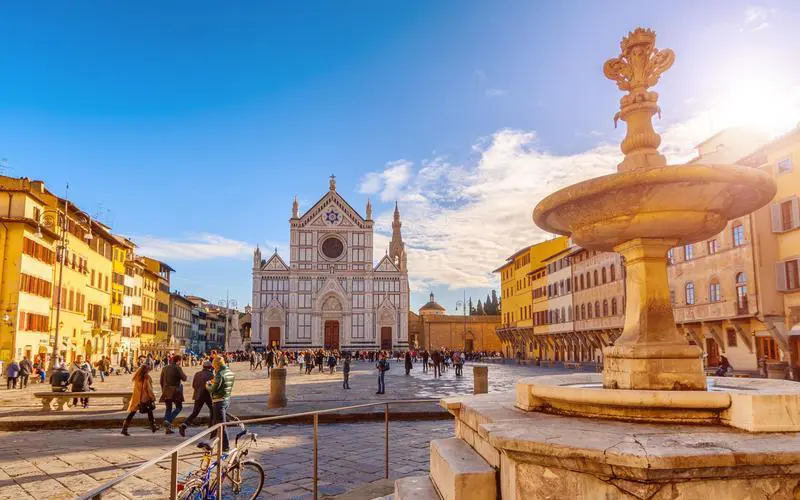
7. Basilica di Santa Croce

Inside this vast Franciscan church lie tombs and memorials to Michelangelo, Galileo, Machiavelli, and Rossini. The side chapels feature luminous fresco cycles, while the cloisters are serene spaces where cypress trees cast a patterned shade.

Florence’s leather-working tradition is kept alive at the adjacent Scuola del Cuoio. Here, you can watch artisans at work on their benches and browse finely crafted leather goods.

Florence Square and the Basilica of Santa Croce

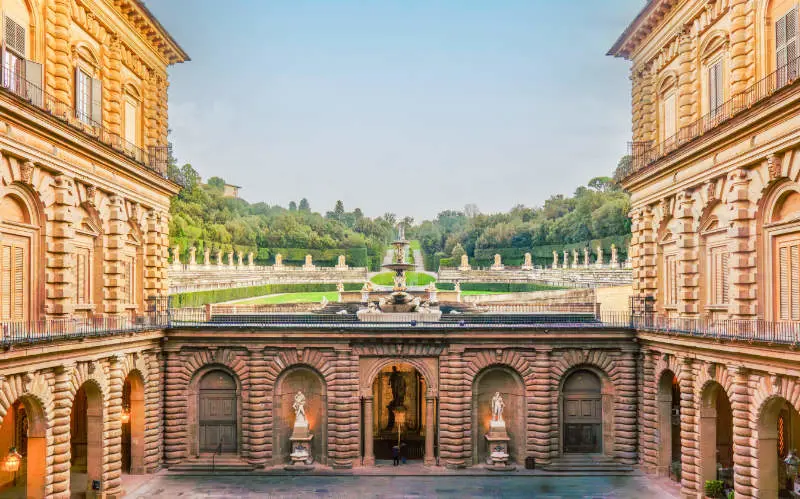
8. Pitti Palace and Boboli Gardens

Across the Arno is the Medici’s more relaxed domain. The Pitti Palace houses several museums, including the Palatine Gallery’s rooms, which are hung with masterpieces by Raphael and Titian.

Behind it, the sprawling Boboli Gardens rise up the hillside, featuring tree-lined avenues and lawns with fountains, grottos and statuary that frame city views. Many visitors enjoy a picnic or a gentle stroll here in pleasant weather – there are gravel paths and slopes in the gardens, so comfortable footwear could make a visit more enjoyable.

Boboli Gardens from the Pitti Palace in Florence, Italy

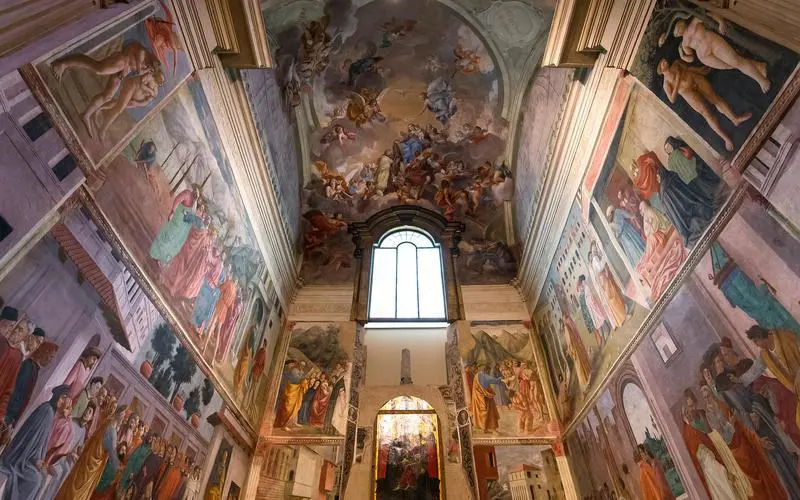
9. Brancacci Chapel (Santa Maria del Carmine)

Tucked in the Oltrarno neighbourhood, this chapel is often referred to as the Sistine Chapel of the Early Renaissance. The art here is as beautiful and detailed as it is groundbreaking. The chapel features Masaccio and Masolino’s fresco cycle, known for its innovative use of perspective and expressive human figures.

Despite the chapel’s intimate size, the colours in its artwork are big and jewel-bright after being carefully restored.

Interiors and architectural details of Brancacci chapel in Florence, Italy

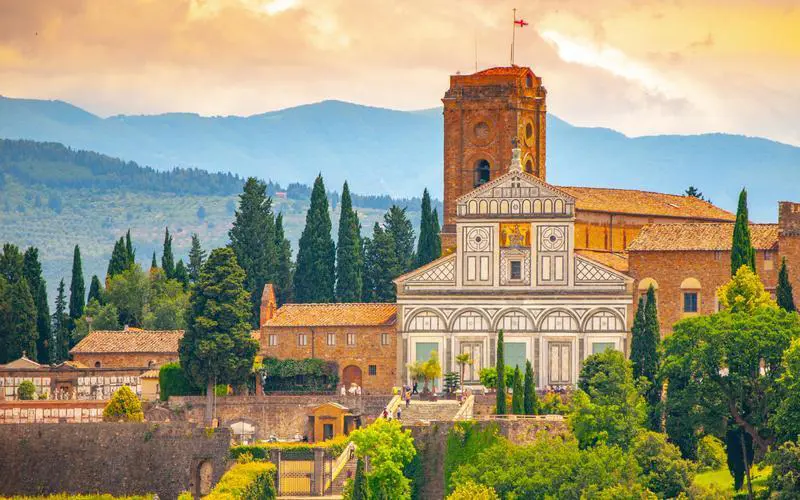
10. San Miniato al Monte (Oltrarno)

Above Piazzale Michelangelo, this Romanesque church offers one of the loveliest panoramas in Florence. From the Duomo, it’s about a 35–40 minute walk; once you cross the Arno the final stretch is uphill, but the view – and the church – repays the effort if you appreciate Romanesque architecture and sweeping city panoramas.

The church’s green and white façade mirrors that of the city’s grander churches, and its inlaid marble floor and a crypt that feels ancient and serene all reward the climb.

Discover our top 25 interesting facts about Italy.

Basilica San Miniato al Monte in Florence, Tuscany, Italy.

Florentine Markets and Shopping

Florence is famous for its artisanal goods, including leather, marbled paper, and gold jewellery.

The San Lorenzo area offers two distinct Florentine shopping experiences. The outdoor San Lorenzo Market sells leather goods and souvenirs – the quality can vary, so inspect the stitching and zips before you buy.

Inside, the Mercato Centrale’s ground floor is the traditional food market – pyramids of artichokes, wheels of pecorino, and counters piled with salumi. Upstairs, a modern food hall serves a variety of dishes, including fresh pasta and lampredotto, the city’s traditional tripe sandwich.

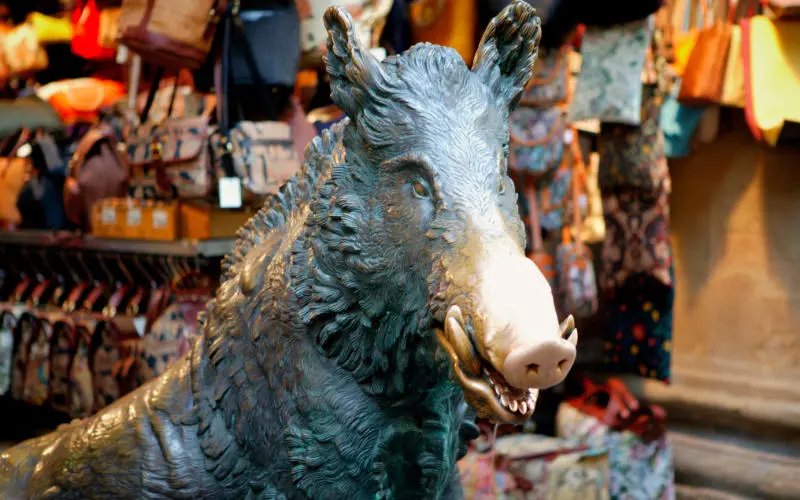
The Porcellino Market – another excellent spot for leather goods and souvenirs – can be found under the Loggia del Mercato Nuovo. According to legend, rubbing the snout of the bronze boar statue brings good luck and a promise to return to the city.

Around Via Maggio and the side streets of Santo Spirito, you’ll find workshops for bookbinding, marbled paper, ceramics, and bespoke sandals. Many artisans are happy to explain their craft.

Explore our full selection of escorted Italy tours and holidays.

Wild Boar statue, Porcellino at Mercato Nuovo, Florence, Tuscany, Italy

When Is The Best Time to Visit Florence?

Florence is a year-round destination, but your experience will vary depending on the seasons.

If you visit in spring, the gardens are in bloom and the temperatures are mild. April and May often see temperatures in the mid-teens to low 20s°C, with occasional rain showers.

During the summer, café terraces are lively and there are plenty of evening events. Daytime temperatures rise quickly, so plan your sightseeing for the early morning and enjoy the shaded streets and piazzas in the afternoon.

Autumn brings a softer light, and the countryside around Florence is often busy with the grape harvest. September is generally warm and pleasant, while October turns milder with cooler evenings. November may see more showers and quieter galleries.

During the winter months, Florence’s streets can be quieter, and the city can be enjoyed with fewer crowds. Some attractions may have shorter hours, and the weather may be chilly, so layers are recommended.

Explore Florence With Travelsphere

Florence rewards self-exploration, but it also benefits from context. A knowledgeable guide can knit stories together – how the Medici shaped the city, why Brunelleschi’s dome was revolutionary, where to stand to make a painting come alive.

On a wider Tuscany trip, a planned Florence day means you arrive with a list of must-see attractions sorted and a route that keeps walking reasonable, with time for a coffee under arcades or a gelato by the river.

An escorted itinerary distils the best of Florence, helping you make the most of your time without rushing. Travelsphere’s Treasures of Tuscany & Florence guided tour includes time in Florence alongside Vinci, Montecatini and the Chianti Hills, so you experience the city in context.

A dedicated Holiday Director handles the logistics, while expert local guides share stories that bring Florence to life.

Enjoy some of the best experiences Florence has to offer – request a brochure or contact a member of our friendly customer team.