Burgundy – Pinot, Chardonnay, and the Climats
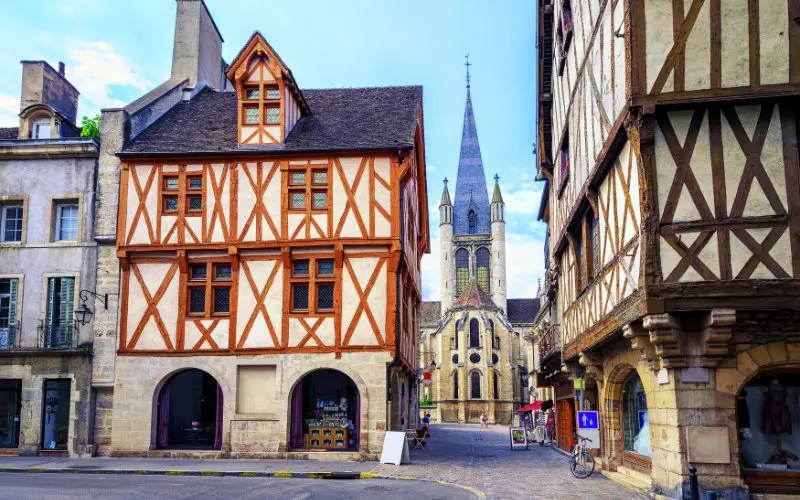
As you travel south, the bubbles give way to something more grounded and earthy. Burgundy (or Bourgogne) is a patchwork quilt of tiny vineyard parcels, some no larger than a typical garden, each with its own name and distinct character.
The region spans roughly from Dijon to Santenay, with notable side regions including Chablis to the north and the Mâconnais to the south.
In Burgundy, they talk about climats. These are precisely named vineyard plots on the slopes of the Côte d’Or. In 2015, they were granted UNESCO World Heritage status.
Each plot has its own unique soil, slope, exposure, and drainage, and have been mapped and tended to for centuries.
Two grapes dominate here: Pinot Noir and Chardonnay.
Pinot Noir is the grape of choice for Burgundy’s red wines, producing perfumed, refined wines with gentle acidity and notes that range from rose petal and red cherry to forest floor and spice as they age.
Chardonnay grapes produce white wines with a long finish and mineral character, featuring notes of citrus, green apple, hazelnut, and flint.
Equal care goes into the production and labelling of Burgundy wines. The region uses a clear hierarchy, shown on each label, to indicate how specific the origin of the grapes is:
Regional – Wine made from grapes grown anywhere throughout the Burgundy region.
Village – Wine made from grapes from a specific village, such as Volnay or Pommard.
Premier Cru – Made from grapes grown in climats within a village (such as Volnay 1er Cru Les Caillerets).
Grand Cru – Rare, age-worthy wines produced in Burgundy’s most prestigious vineyards that have an appellation.